
The "Off-Putting Stare": Why Empathy is the Ultimate Language Learning Tool
What one off-putting stare can do to a learner’s confidence, and why a little patience from native speakers makes all the difference.
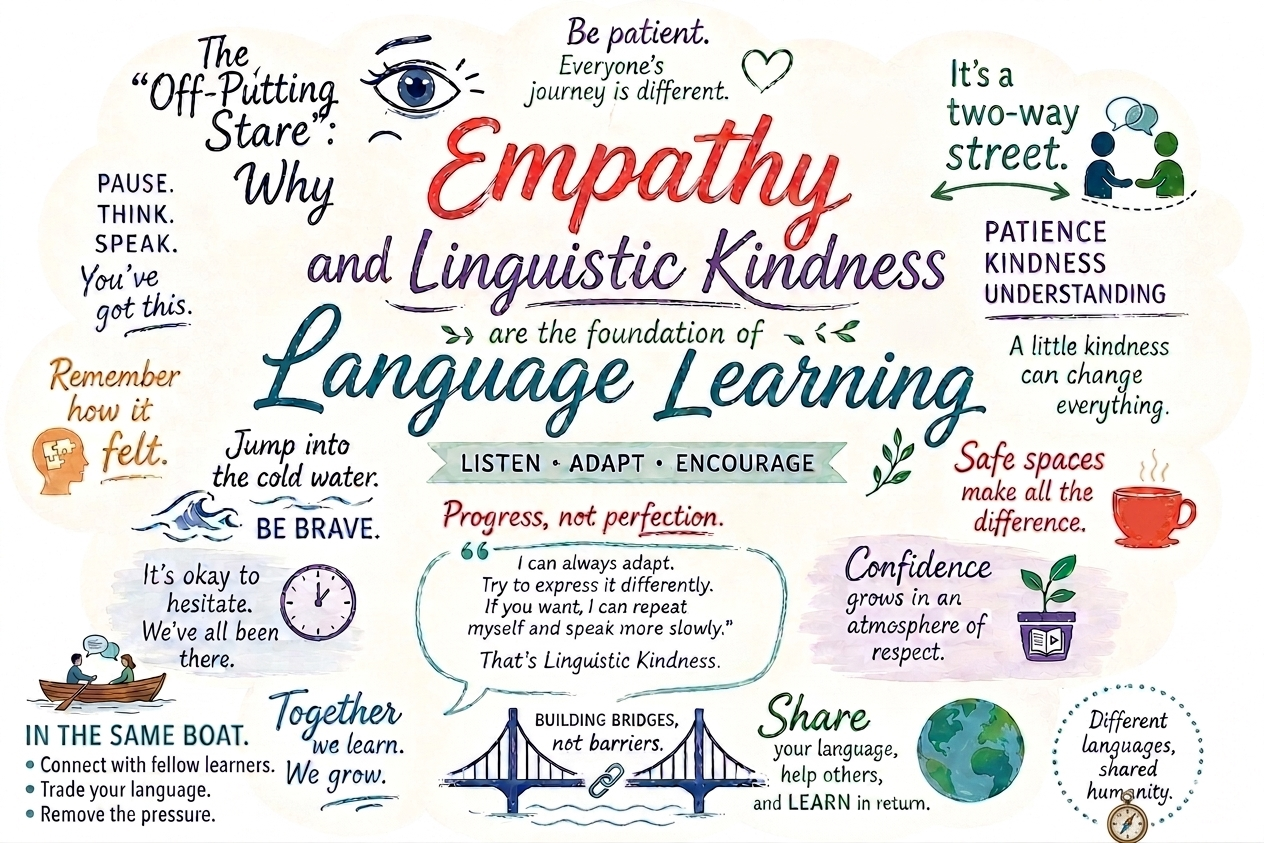
A friend of mine living in Berlin recently visited the Berlinale international film festival. During one of the screenings, she had an awkward encounter with a fellow filmgoer that perfectly highlights the hidden challenges of learning a new language.
Before the movie started, the man sitting next to her asked for her opinion on the festival so far. He spoke in German. Although her German is excellent, she needed a brief moment to gather her thoughts and formulate her response. As she began to answer, the man realized she was not a native speaker.
Immediately, his expression changed. He gave her what she later described as an "off-putting stare."
This look made her incredibly nervous. Her confidence vanished, and she began stumbling over her words. The awkward tension grew until the man simply gave up and stopped talking to her altogether. It was a disheartening experience.
The Reality of "Jumping into the Cold Water"
As a German teacher in Berlin, I hear stories like this all the time. Such encounters are a standard part of my students’ everyday lives.
As educators, we constantly urge our students to practice in the real world. We tell them to chat with neighbors, talk to colleagues, and "jump into the cold water." We say it is the absolute best way to master a language.
But let’s be honest: that is a terrifying task. Anyone who has ever learned a foreign language will agree.
As language learners, we do not need eye-rolls or judgmental stares when we take a minute to construct a sentence. We crave patience, understanding, and native speakers who remember what it feels like to struggle.
The Power of Linguistic Kindness
I know exactly how much a little kindness can change the game. Years ago, I traveled to Russia for the first time after studying the language for two years.
I was incredibly lucky to meet someone who genuinely took the time to listen to what felt like "baby Russian." Her very first words to me were:
“I can always adapt. Try to express it differently. If you want, I can repeat myself and speak more slowly.”
I was absolutely blown away by her empathy. That single interaction gave me the confidence to keep trying.
That is exactly what I wish for my students: to find patient, kind people to practice with. Language learning is a two-way street, and sometimes, the best thing a native speaker can give a learner is simply a little bit of time.
Finding Safe Spaces to Practice
This is why I often suggest seeking out communities of fellow learners. Platforms like fluentea.com operate on this exact philosophy of mutual support.
When you connect with a native speaker who is simultaneously trying to master another language, the dynamic changes completely. There is an automatic, unspoken understanding. Both sides know exactly what it feels like to hesitate, forget a word, or feel vulnerable.
Trading your native language to help someone else—while they do the same for you or other learners—removes the pressure: It’s a beautiful way to practice with people who are already in the same boat and naturally have the patience you need.
Comments