
How We Stay Connected to People We Never Meet: A Gobi Bear, a Train and a Brooch
About Human Connection, part 1: what a Gobi bear, a scent on a train and a slip of the tongue show about connecting without meeting.
Part 1 of the series About Human Connection. Each post can be read on its own.
Why I Am Starting This Series
Lately I have noticed more and more content, from news reports to podcasts, about whether AI will make language learning unnecessary. Much of what I have read and watched says that AI cannot replace human connection. But it rarely explains what that connection looks like.
In this series, I want to look at it more closely.
The idea for this first post came from a short clip from the BBC nature series Asia, about the Gobi bear. Their story is sad and hopeful at the same time, and it spoke to me, because it shows a kind of connection that is easy to overlook: a connection doesn’t always need a meeting.
Bears That Rarely Meet
In the clip, the narrator explains that Gobi bears are so rarely seen that they were once thought to be a myth. “Gobi” means “waterless place” in Mongolian, and the bears’ sources of water may be 100 miles apart, so they live a solitary life on the edge of survival.
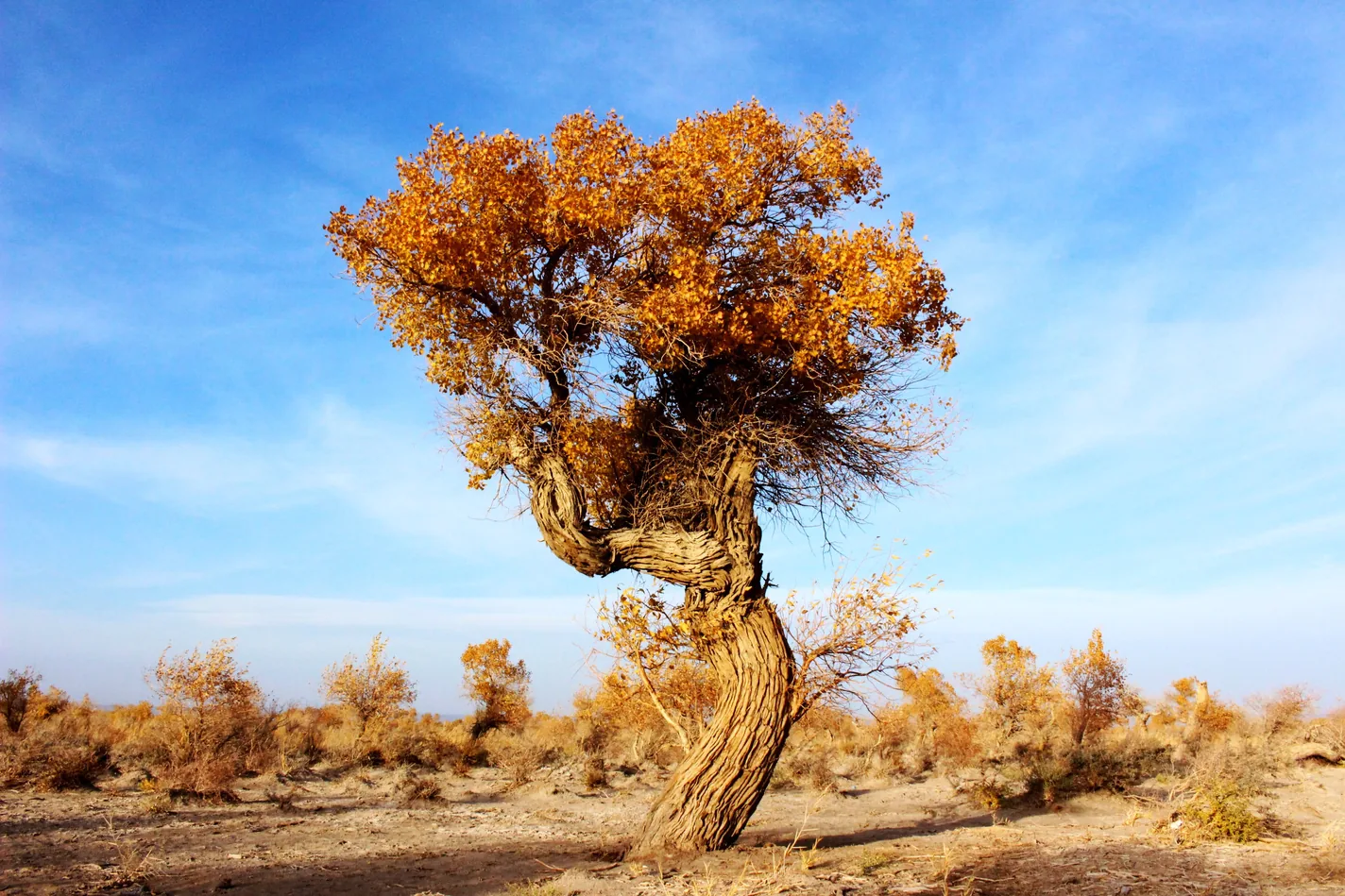
But there is “a place where they go to connect with each other”: ancient poplar trees. There is nothing for the bears to drink there, yet the trees matter to them. As a bear rubs against the bark, it leaves its scent, “a message to other bears to say they’ve been here.” With so few bears left, it may be months before another one comes by. This could be “the closest they ever come to meeting another bear.”
A Scent on a Train
While I was working on this post, I remembered a story about my friend Vitalina. Some of you may know her from Friday Calls With Vitalina: A Friendship That Works Without Perfect Grammar, where I wrote about our Friday calls.
Before Vitalina and her son left Germany and went back to Ukraine in the summer of 2023, I gave her some gifts and a small package of travel essentials that I considered important. They were traveling from Berlin all the way to Kyiv by train and bus, a very long trip. I knew about her back pain and thought she might need something for it on the way, so I packed a heat cream. In my experience, it is sometimes difficult to wash your hands on a bus, or even on a train, after applying a cream like that. So I added some refreshing towels in small sealed packets, which also have a wonderful smell.
Somewhere in Ukraine, when they wanted to eat something on the way, they took out the towels. They were sharing a train compartment with other travelers, who noticed the smell and started talking to Vitalina, and soon she was telling them about me.
I have never met those travelers, and I was never on that train. But the smell of the towels traveled with Vitalina into a compartment full of strangers, and it started a conversation about me. In a way, the towels were my scent on the tree.
What People Leave With Us
When we meet people, they sometimes leave something of themselves with us: a hint, a trick, a place they recommend, or a new way of looking at things. Later we pass it on to someone else, who may never meet the person it came from.
Here is a small example. On a trip to Portugal, my husband and I had a very nice early dinner in the garden of a great restaurant. As we were finishing, a British couple from our hotel sat down at the next table and asked us for recommendations.
I told them that I had the Cataplana de Legumes, a vegetable stew cooked in a traditional Portuguese copper pot, and that my husband had the sirloin steak with claws. I meant clams. I noticed my mistake but couldn’t correct it. They politely said that the waitress would surely know what we had.
Back home, I told a friend about it. She said: “You were simply referring to nose-to-tail eating. If they didn’t get that, it’s on them.” (Nose-to-tail eating means using the whole animal, not only the best cuts.)
English is not my first language, and slips like this happen to many learners. My friend didn’t correct me or comfort me. With one sentence, she turned my slip into a joke, and the moment I had found a little embarrassing became one I enjoy telling.
She has a gift for looking at things from an angle I would never have thought of, and it seems to come to her naturally. I wish I could do it as easily. Since then, I sometimes try to look at something in a more creative way, and not to expect the mainstream answer. You will probably never meet my friend. But her way of looking at my slip reached me, and now, through this post, it has reached you too.
Traces in a Community
Talking with a language partner is one way to connect, and it is also a way to leave traces. When learners talk to each other on FluenTea, they pass things on, the way the bears do at the poplar trees. One learner might share a trick that makes a grammar point click, another a story about a slip like mine that helps a stranger worry a little less about their own.
The Next Bear at the Tree
The towels carried a little of me to strangers on a train. Through Vitalina, something also came back to me. She told her friend Tanya, whom I have never met, about me. When Vitalina visited Berlin, she brought me a gift: a brooch that Tanya made by hand, in the shape of an ear of wheat, in blue and yellow, the colors of Ukraine’s flag. It is very special to me, and I still have it.
Vitalina took my towels to Ukraine and came back with Tanya’s gift. Like the next bear at the tree, Tanya left a trace of her own. She thought of me, a person she had never met.
We often think of connection as two people sitting across from each other, talking. That kind matters a great deal. But there is another kind, quieter and easy to overlook: the scent on the tree, the towel on the train, the joke about claws. It can reach people we will never see, and sometimes, as with Tanya, it finds its way back.
If someone has left you something, a trick or a story, that you later passed on, I would love to read about it in the comments.
Thank you to Vitalina, Tanya and my friend for letting me share their stories. And Tanya, thank you. The brooch means a lot to me, and so does the connection it stands for.
Frequently asked questions
What is a Gobi bear?
The Gobi bear lives in the Gobi Desert, in the dry heart of Asia. In the BBC series Asia, the narrator describes it as so rarely seen that it was thought to be a myth, and says the future of these bears rests on just a few individuals.
How do Gobi bears stay in touch without meeting?
They rub against ancient poplar trees and leave their scent on the bark, a message to other bears that they have been there. With so few bears left, it may be months before the next one comes by.
Can you feel connected to someone you have never met?
I think so. A connection can travel through other people: a gift, a recommendation, a story or a new way of looking at something. In this post, the smell of a gift reached strangers traveling through Ukraine, and a gift from someone I have never met reached me in Berlin.
Can AI replace human connection in language learning?
This series doesn’t try to settle that question. It looks at what human connection looks like, starting with connections that don’t need a meeting: a trick, a story or a new way of looking at something that people pass on to each other.
Sources
- The full episode streams on BBC iPlayer in the UK only; I watched a short clip of the Gobi bear scene.
- BBC World Service (2026, October 23). Are human interpreters still necessary? [Podcast].
- DW News (2026, November 3). Does it still make sense to learn a new language in the age of AI? [Video report].
- Header image: desert poplar in autumn, by ccp877 on Pixabay, used under the Pixabay Content License.
Comments